
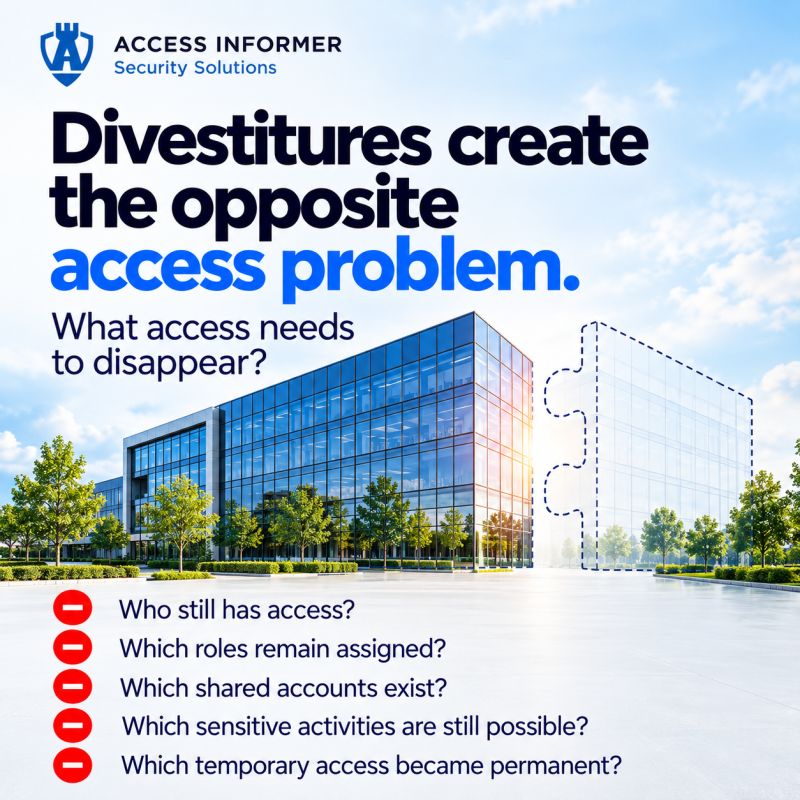
Acquisitions ask:
𝗪𝗵𝗮𝘁 𝗮𝗰𝗰𝗲𝘀𝘀 𝗻𝗲𝗲𝗱𝘀 𝘁𝗼 𝗰𝗼𝗺𝗲 𝘁𝗼𝗴𝗲𝘁𝗵𝗲𝗿?
Divestitures ask:
𝗪𝗵𝗮𝘁 𝗮𝗰𝗰𝗲𝘀𝘀 𝗻𝗲𝗲𝗱𝘀 𝘁𝗼 𝗱𝗶𝘀𝗮𝗽𝗽𝗲𝗮𝗿?
And that can be surprisingly difficult.
People move.
Responsibilities split.
Systems stay shared for a period of time.
Temporary access gets created.
Transition agreements remain in place.
Months later, the organizational separation may be complete.
But the access separation may not be.
That’s where the questions become important:
✅ Who still has access to the old environment?
✅ Which roles remain assigned?
✅ Which shared accounts still exist?
✅ Which sensitive activities are still possible?
✅ Which temporary exceptions became permanent?
A divestiture isn’t finished just because the legal entities separated.
From an SAP security perspective, it is finished when the access does too.

Role redesign should start with what people actually need
Role redesign projects can become very complicated very quickly.There is a lot to analyze:• Existing roles•...